
A medieval court by the irrigation channel
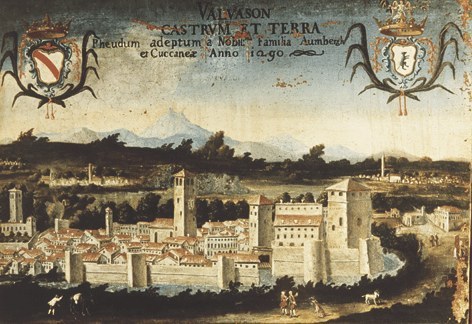
The village of Maiaroff has been inhabited for around two thousand years. Between the 19th and 20th centuries, Roman-era artefacts were unearthed here, dating from the 1st century BC to the 4th century AD. There are also traces of a continuous settlement during the Gothic and Lombard periods, as well as some jewellery from the Alpine Slavic culture known as the Köttlach culture (10th–11th centuries). Today, these artefacts are housed in the museums of San Vito al Tagliamento and Tesis di Vivaro.
The name is of Germanic origin and dates back to Medieval German. Meier (‘farm manager’) and hof (‘courtyard, farm’) refer to a farmstead run by a farmer who managed the land on behalf of the lord. According to another interpretation, the place name refers to the ‘lord’s court’, the seat of the bailiff of the territory before power shifted to Valvasone Castle.
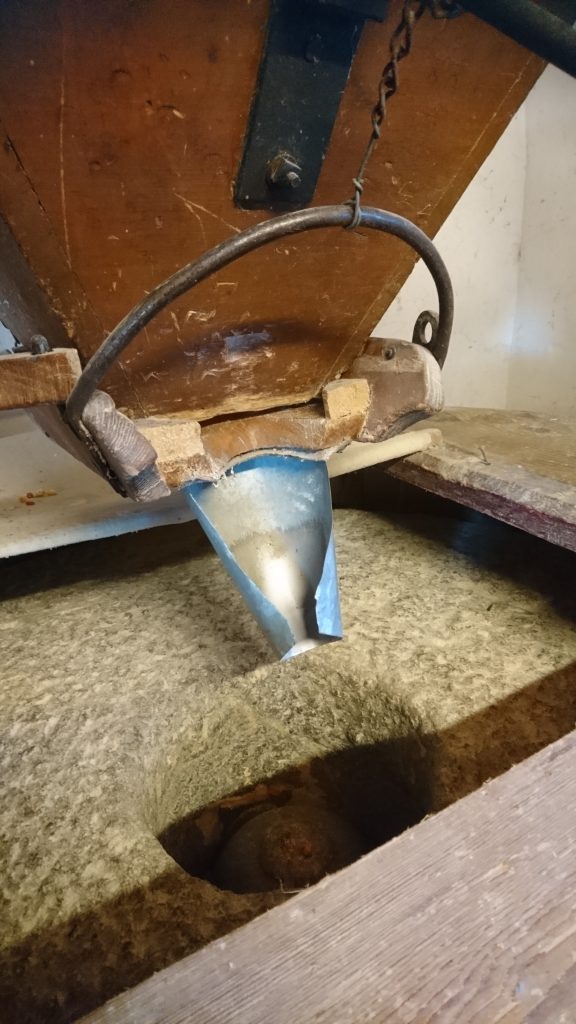
In the Middle Ages, building a mill was a costly undertaking. It required a great deal of timber, metals for nails and gears, millstones transported from quarries, and, above all, access to water from a river or irrigation channel. For this reason, in western Friuli, at least from the 9th–10th centuries onwards, whoever ruled a manor or a village also owned the mill. Peasants would bring their grain there and pay for it to be ground either with money or with a share of their harvest.
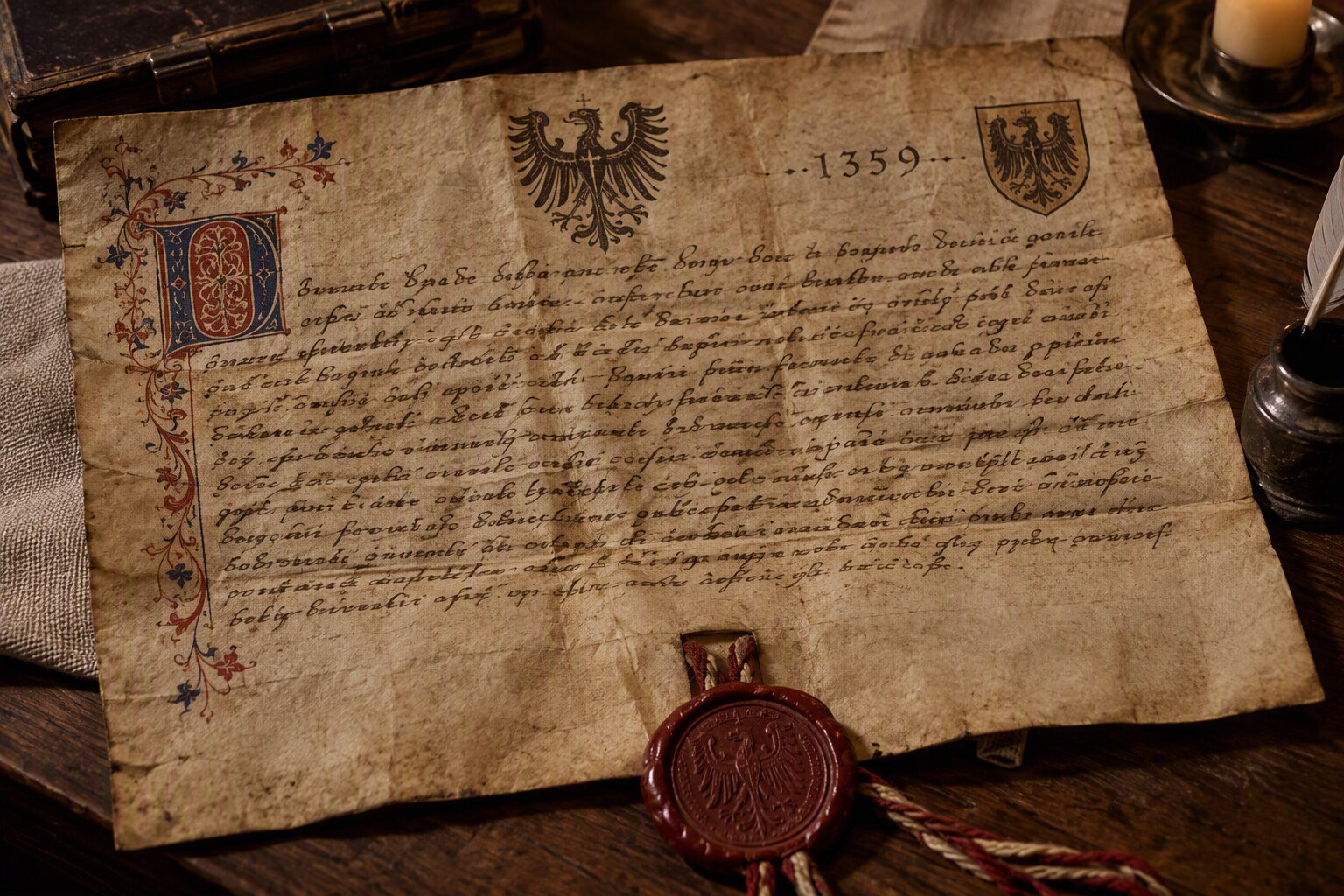
The first document mentioning the mill dates back to 1359. The nobleman Simone di Valvasone, lord of the area, leased an existing sawmill to Giovanni Martignacco, a native of Rivis but resident in Valvasone.
The sawmill was powered by a waterwheel on the irrigation channel that would later be known as the “Roggia dei Mulini”, along the road between Valvasone and San Lorenzo. The contract stipulated that a single-wheel mill for grinding grain be added to the sawmill.
Simone di Valvasone was the same nobleman who, in 1355, had the Hospital of Santa Maria delle Grazie rebuilt.
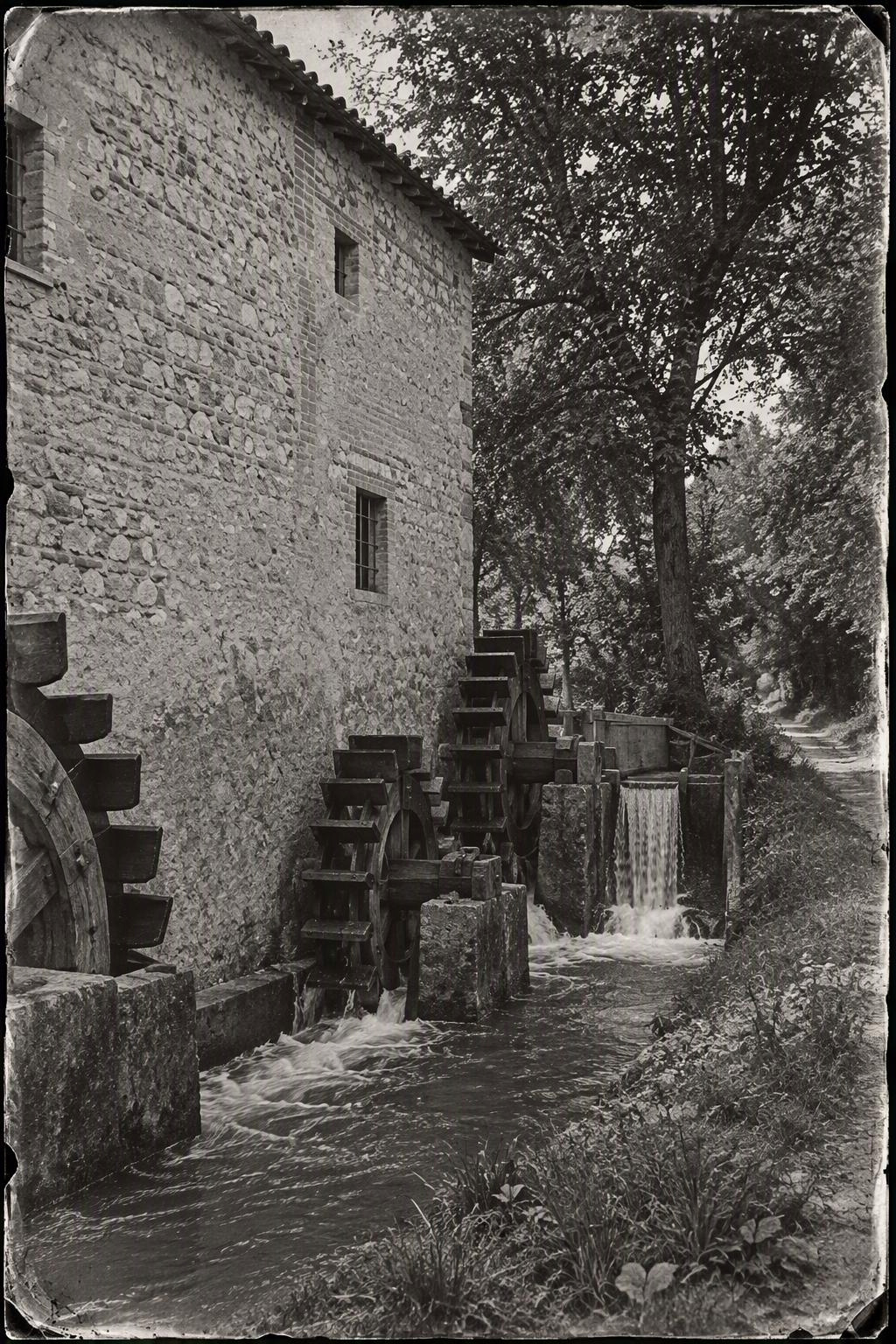
After 1359, no other documents are known to exist until the cadastral maps of the early decades of the nineteenth century. On those maps, the complex – comprising a mill, a dwelling and a rustic outbuilding – still belonged to the nobles of Valvasone, who entrusted it to families of millers. At that time, the mill had three vertical water wheels for grinding wheat and barley.
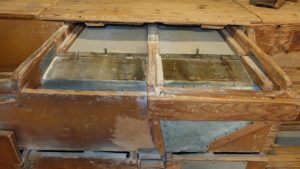
The De Giusti were a family of millers who had previously worked at other mills in Friuli, such as those at Camino al Tagliamento and Orcenico Superiore. They settled at Maiaroff in the early nineteenth century. Between 1910 and 1917, Stefano De Giusti purchased the mill and the surrounding land.
In 1927, the three waterwheels were replaced by a hydraulic turbine. At the same time, the machinery was modernised and a cylinder mill was added to the two stone millstones. Around 1930, parts of the buildings were demolished and rebuilt on a larger scale: the house, stable, cellar, henhouse and pigsty. Further work was carried out between the 1950s and 1960s, and in 1976 a historic restoration was undertaken.

Leo De Giusti was the last active miller and closed the mill to the public in 1989. The millstones, however, have never stopped turning. Thanks to the passion of his son Umberto, the mill has been passed down intact to his grandchildren and great-grandchildren. Even today, it grinds maize and wheat for the family and for educational activities.